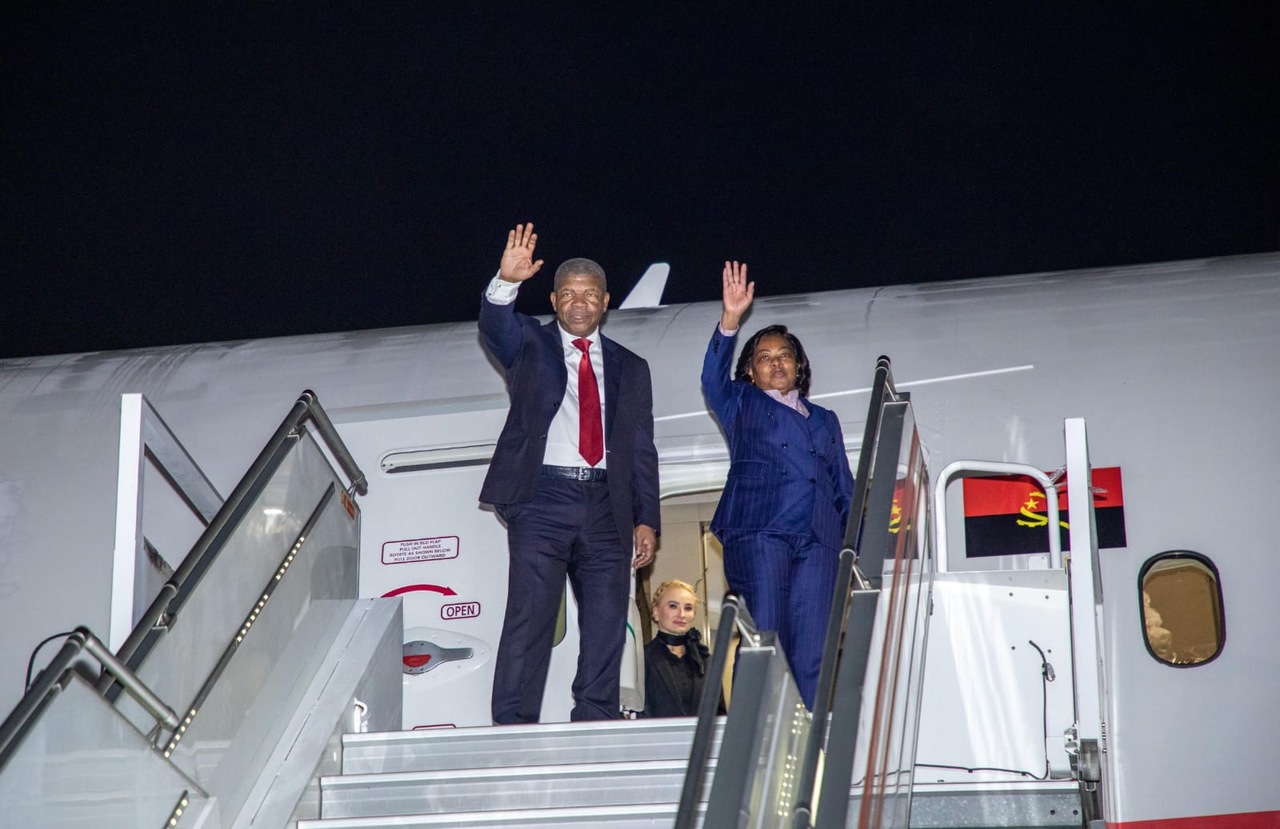

Angolan President João Lourenço departed Luanda on Friday for Cairo, where he will attend two continental African meetings over the weekend focused on integration and the coordination of pan-African institutions.
On Saturday, President Lourenço will participate in the summit of founding members of the African Union Development Agency — NEPAD (AUDA-NEPAD), which he will co-chair alongside Egyptian President Abdel Fattah El-Sisi.
On Sunday, Lourenço will attend the mid-year coordination meeting between the African Union (AU), the Regional Economic Communities (RECs) and the Regional Mechanisms (RMs).
Both gatherings will place continental integration, the implementation of Agenda 2063 and the coordination of African Union structures at the centre of discussions, with direct bearing on efforts to accelerate the continent’s economic and social development.
AUDA-NEPAD serves as the implementation arm of Agenda 2063, the continental strategy that sets out the principal priorities for Africa’s economic and social transformation.
The agency’s mandate is to coordinate and execute priority projects of regional and continental scope, promote integration and mobilise resources and partnerships for development.
Its areas of intervention span infrastructure, industrialisation, agriculture, food security, trade, regional integration and investment mobilisation.
AUDA-NEPAD seeks to translate the African Union’s political commitments into concrete programmes and projects with measurable impact on member states.
The agency’s governance structure includes the Heads of State and Government Orientation Committee (HSGOC), which President Lourenço chairs following his election to the role in February this year.
That body is responsible for providing political leadership and strategic direction for Agenda 2063 priorities.
Lourenço played a prominent role in the process during his tenure as Chairperson of the African Union in 2025.
At the 7th Mid-Year Coordination Meeting, held in Malabo, he underscored AUDA-NEPAD’s central role in advancing the pan-African vision of Agenda 2063 — particularly in mobilising resources for priority continental and regional projects.
The meeting between the African Union, the Regional Economic Communities and the Regional Mechanisms constitutes one of the principal instruments for coordinating African integration.
The mechanism was designed to establish a clear division of responsibilities and strengthen cooperation between the continental organisation, regional structures and member states.
The RECs — including SADC, ECOWAS, ECCAS, COMESA and IGAD — play a fundamental role in the economic and political integration of the continent’s various regions.
The Regional Mechanisms, for their part, complement the AU’s efforts on specific matters, particularly in the area of peace and security.
The coordination exercise aims to harmonise policies, avoid duplication of initiatives, monitor the implementation of African Union decisions and accelerate programmes related to economic integration, trade, infrastructure, and peace and security.
Among the objectives is also the definition of a division of labour grounded in the principles of subsidiarity, complementarity and comparative advantage.
Despite the existence of continental and regional structures, progress towards Agenda 2063 targets remains contingent on the capacity of states and regional organisations to translate decisions into concrete outcomes.
Key challenges include the mobilisation of resources for large-scale projects, the need to improve cross-border infrastructure, the harmonisation of national and regional policies, the effective implementation of the African Continental Free Trade Area (AfCFTA) and responses to the conflicts and crises affecting multiple regions.
Accelerating integration, implementing the AfCFTA, developing infrastructure and improving coordination among the AU, the RECs, the RMs and member states have all been identified as top priorities by the African Union itself.
Source: ANGOP / Original article: https://www.angop.ao/noticias/politica/presidente-joao-lourenco-deixa-luanda-com-destino-ao-cairo/