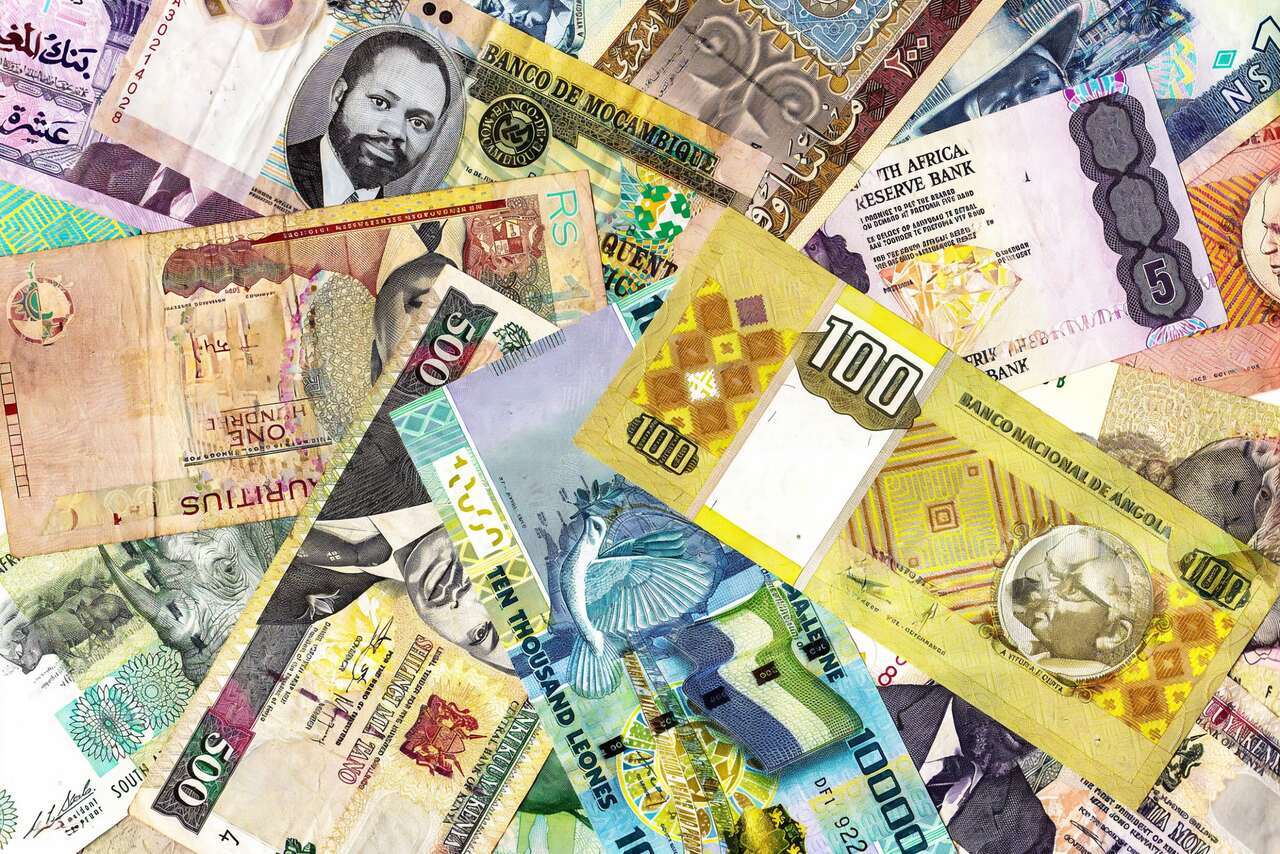

Tunisia retains its position as Africa’s country with the strongest currency against the US dollar in August 2026, followed by Libya and Morocco, according to data from the Forbes currency calculator.
The ranking measures currencies by the number of units required to purchase one US dollar, placing the Tunisian dinar first at approximately 2.96 per dollar. The Libyan dinar ranks second at 6.41, while the Moroccan dirham occupies third place at 9.38 units per dollar.
Ghana’s cedi comes fourth at 11.64 units per dollar, followed by the Seychellois rupee in fifth at 13.52, and Botswana’s pula in sixth at 13.77.
Eritrea occupies seventh place, with the nakfa at 15 units per dollar. South Africa ranks eighth, with the rand at 16.74, followed by Eswatini’s lilangeni at 16.80. Namibia closes the top ten, also at 16.80 units per dollar.
Angola does not feature among the ten African currencies with the highest nominal value against the dollar — a noteworthy absence for an economy heavily dependent on imports of fuels, equipment, technology, medicines and raw materials.
A relatively strong or stable currency can reduce the amount of domestic currency required to pay for dollar-denominated goods. This effect can benefit importing companies, consumers and public finances alike by easing the cost burden of certain imports.
Conversely, a weaker currency raises the cost of goods procured abroad and can exert additional pressure on domestic prices, particularly in economies where a significant share of consumer goods and production inputs is sourced externally.
Among Southern African nations, South Africa’s position warrants particular attention. The rand appears in eighth place in the August rankings and has recently recorded a significant appreciation.
According to Reuters, on 21 August the rand reached its strongest level since the outbreak of hostilities between the United States, Israel and Iran, buoyed by rising gold prices and a weaker US dollar. By the end of the preceding week, the South African currency was trading at 15.9925 rand per dollar, approximately 0.8% above the previous close.
The rand’s trajectory illustrates how quickly a currency’s position can shift in response to commodity price movements, capital flows, economic prospects and dollar dynamics.
Uganda offers a contrasting example. Although the Ugandan shilling trades far below the top-ranked currencies in nominal terms — at around 3,700 shillings per dollar — it has been benefiting from foreign exchange inflows.
On 20 August, Reuters reported the shilling trading between 3,715 and 3,725 units per dollar, supported in part by hard-currency inflows from charitable organisations and commodity exporters.
This demonstrates that a currency need not carry a high nominal value to deliver a positive performance. Stability and an appreciating trend are equally important signals for an economy.
A strong currency does not necessarily imply that a country’s economy is more developed or wealthier. A currency’s nominal value is shaped by multiple factors, including monetary policy, exchange-rate regimes, inflation, international reserves and historical denomination decisions.
Nevertheless, exchange-rate stability can represent a meaningful advantage for import-dependent economies. When a domestic currency holds its value, businesses and consumers require less local money to acquire dollar-priced goods and services.
Fuels, medicines, machinery, technology equipment and raw materials are therefore subject to less cost pressure, helping to limit the pass-through of currency depreciation into domestic prices.

For Angola, where the kwanza’s trajectory continues to have a direct impact on import costs and household purchasing power, the performance of Africa’s major currencies constitutes an important indicator to monitor.
The August ranking nonetheless underscores that a currency’s so-called ‘strength’ must be assessed beyond the simple metric of units per dollar. Stability, inflation, foreign-exchange reserves, export capacity and investor confidence are the determining factors in evaluating the genuine robustness of any currency.
The full August 2026 ranking of Africa’s ten strongest currencies by nominal exchange rate against the dollar is as follows: Tunisia (dinar, 2.96), Libya (dinar, 6.41), Morocco (dirham, 9.38), Ghana (cedi, 11.64), Seychelles (rupee, 13.52), Botswana (pula, 13.77), Eritrea (nakfa, 15.00), South Africa (rand, 16.74), Eswatini (lilangeni, 16.80) and Namibia (dollar, 16.80).
The data serves as a reminder that exchange-rate competitiveness is a multidimensional concept: a currency’s headline rate against the dollar reflects not only monetary policy decisions but also the underlying structural conditions of each economy, from its export base to its fiscal position and central-bank credibility.
Source: Mercado / Original article: https://mercado.co.ao/tunisia-lidera-ranking-das-moedas-africanas-mais-fortes-em-agosto/