
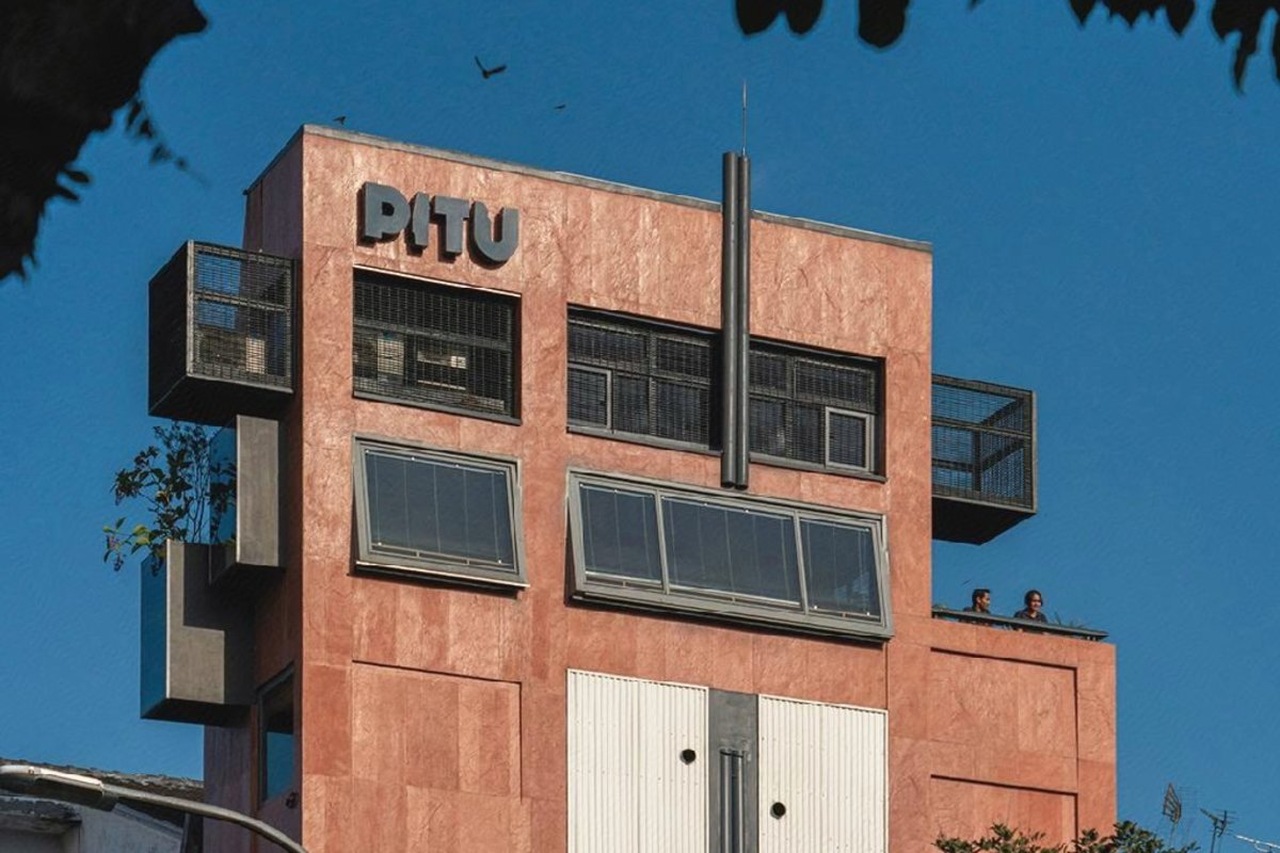

PituRooms, located in Salatiga on the Indonesian island of Java, measures just 2.8 metres in width and is positioning itself as one of the narrowest hotels in the world.
The project was designed by Indonesian architect Ary Indra, a Salatiga native who returned to his hometown after building a career in Jakarta and Singapore. On his return, he came across an unconventionally sized plot of land that had been deemed unsuitable for conventional development.
His solution was to transform that constraint into a hotel concept. Inaugurated in December 2022, PituRooms spans five floors and offers seven rooms — a number that gives the property its name, as ‘pitu’ means ‘seven’ in Javanese.
Each room was designed to make maximum use of the available space and includes a double bed and a compact bathroom with a shower and toilet. Despite the limited dimensions, the rooms feature distinct atmospheres, decorated with locally produced artworks and design elements.
The hotel’s ambitions, however, extend beyond being an architectural curiosity. Its stated objective is to contribute to the tourism profile of Salatiga, a city that remains largely unknown among foreign visitors travelling through Indonesia.
Situated approximately 480 kilometres southeast of Jakarta, Salatiga lies at the foot of Mount Merbabu. The city is recognised domestically for its quality of life, culinary offer, solid infrastructure, and tranquil environment. During the colonial period, it was a favoured weekend retreat for Dutch settlers.
The hotel’s concept deliberately challenges the conventional logic of the hospitality industry, which is typically associated with ever-larger, more luxurious, and more elaborate spaces. At PituRooms, the defining characteristic is precisely the scarcity of space.
The building’s architecture was conceived as an exercise in what the project describes as micro-space design, requiring guests to adapt their movements to a reduced but functional area.
Beyond the guest rooms, the property includes a rooftop restaurant open to local residents, and hosts events, art exhibitions, and other cultural initiatives.


With this project, PituRooms converts a physical limitation into a differentiating feature, seeking to demonstrate that an under-the-radar city can find new ways to attract visitors.
Source: Diário Económico
Original article: https://www.diarioeconomico.co.mz/?p=532331