
Maputo city is the main financial, corporate and commercial center of the country. It concentrates large renowned institutions, renowned restaurants and a variety of leisure places to the taste of each one. Its architectural composition is marked by the classic European style which made it, at one time, one of the most attractive cities in Africa.
Talking about Maputo in its formative years and talking about it today certainly results in completely different stories. The city has long been losing the luster that once characterized it, and downtown is a case in point. Although it is situated right in the center of the city, it is marked by dilapidated streets and buildings, a concentration of filth, and the prevalence of marginalized groups (beggars, street children, and sex workers).
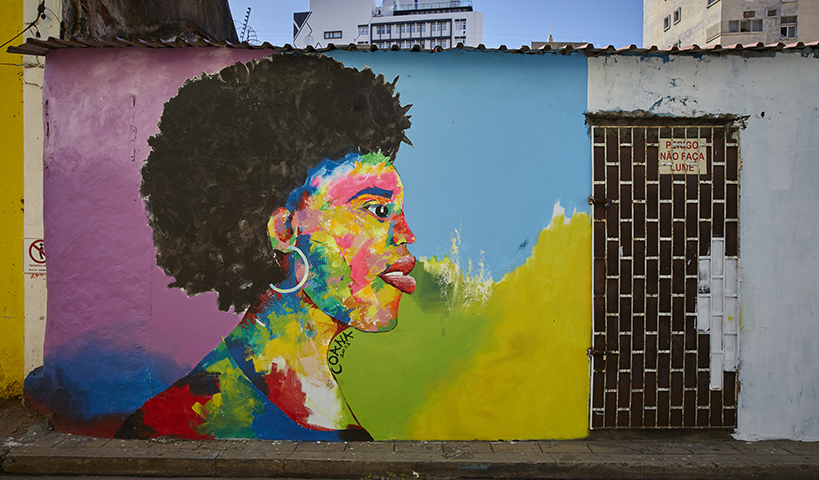
This situation has long been known to all, and in order to rescue the original image of the country’s capital, the group ‘Bring Back Maputo’, BBM in association with CIN paints has been giving a new life through color and art in the buildings and streets downtown.
The street rehabilitation project organized by BBM has a large component of social responsibility in that, through awareness campaigns, marginalized groups are actively included in the activities carried out, promoting not only hygiene and cleanliness, but also job creation.
Yuri Mendes, coordinator and founder of BBM says that this project aims to create opportunities for the most disadvantaged through social insertion, and cites the example of the management of public toilets, the revenue from which benefits the janitors of the toilets, while also ensuring that people avoid going to the toilet in inappropriate places.
It is hoped that this initiative will promote social transformation, improve urban tourism, and revitalize the historic landmarks that once positioned Maputo as one of Africa’s leading cities
“As the streets have a new image, there will be more space for restaurants, bars, and businesses that will also contribute to job creation for the disadvantaged,” explains Yuri Mendes.
CIN, (a paint brand) for its part, has provided painting technique training to local residents, providing what it calls a “sense of local patriotism” and allowing them to feel an essential part of the project and contribute to the maintenance and care of the streets and buildings.
Nicole Henriques, an architect and expert in the philosophy of color, explained that the painting done “follows a logic in which vibrant yet harmonious colors were chosen to express positivity, and a study was made of the surveys of the buildings to understand the functionality and architectural relevance that each one presents and, based on the study, the appropriate colors were chosen for each building. Warm colors like red and yellow were used for the restaurants and bars, and cool colors like green and blue for the corporate environments,” explains the architect to E&M.


The requalification of the architectural and cultural heritage of cities is not something new. In Africa, for example, the revitalization of urban tourism through initiatives of this kind, with a strong component of insertion and civic and social education of marginalized groups, has already been felt in neighboring South Africa, where its capital, Cape Town had the streets of Bo Kaap resplendent with art and color.
It is hoped that this initiative will promote social transformation, improve urban tourism, and revitalize the historic landmarks that once positioned Maputo as one of Africa’s leading cities.