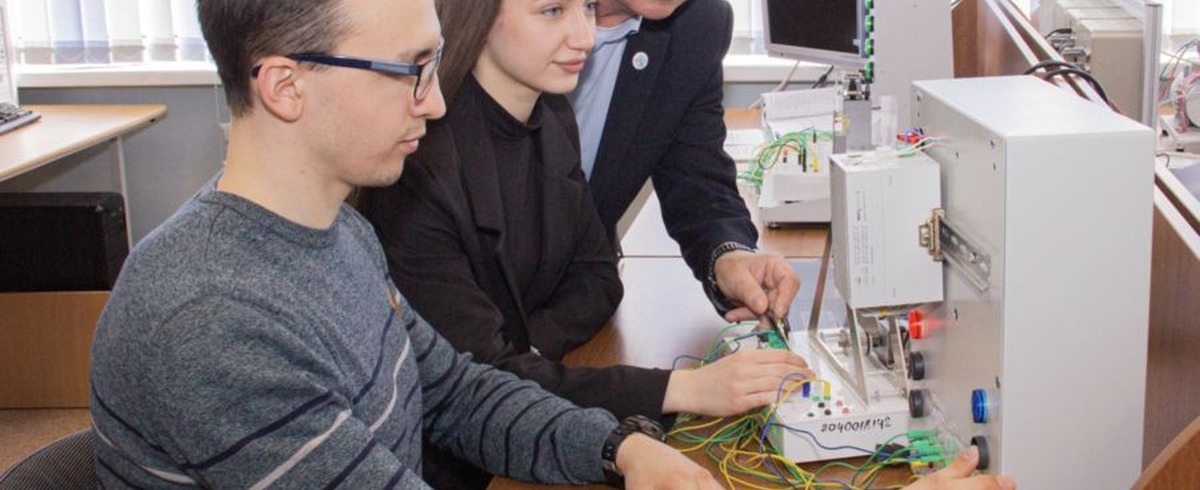

A team of scientists at the South Ural State University (YuUrGU) in Russia has developed equipment capable of identifying defective cylindrical parts within seconds, before they enter the industrial production process. The solution automates dimensional inspection and significantly reduces the need for manual worker intervention.
According to the researchers, the equipment was developed to address a common problem in industrial facilities: the entry of out-of-specification parts into processing machinery. When a defective part is not identified in advance, it can result in the production of unusable components, generating waste of energy, materials, and financial resources.
The team noted that some companies currently conduct quality control on a sampling basis. In a batch of one thousand parts, for example, as few as five to ten units may be selected for manual verification. This method allows defective units to go undetected and advance to subsequent stages of production.
To carry out measurements, the researchers installed a support structure that holds cylindrical parts at a 90-degree position. Data is collected automatically through five sensors that combine induction and ultrasound technologies to determine the dimensions of each part.
The solution can measure each unit in an average of five seconds and without human intervention. The system determines the diameter and length of a part from a single reference point, calculating the distance between that point and the object placed in the equipment.
According to the developers’ estimates, the system could detect up to 30% of defective parts in certain batches that would previously have passed through to later production stages or required additional manual labour to be identified. The automation of the process could therefore reduce resource consumption and the costs associated with quality control.
Despite its compact dimensions, the equipment can be adapted to the specific requirements of each company. The estimated installation cost is approximately 100,000 roubles. The technology is designed for companies that need to carry out incoming inspection of cylindrical parts and can be applied primarily in the forging and pressing equipment manufacturing, metallurgy, and machine-building sectors.
Source: TV Brics

Source: Diário Económico
Original article: https://www.diarioeconomico.co.mz/?p=543673