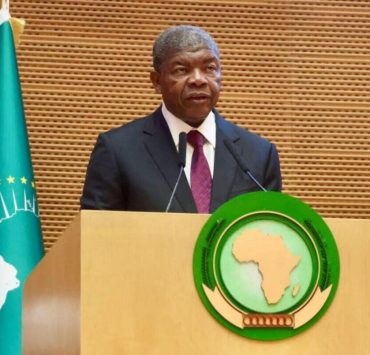

Angola's Foreign Minister Téte António has called for trade and investment to be placed at the top of Africa's diplomatic agenda, arguing that economic grievances lie at the root of most conflicts on the continent.
António made the remarks on Friday during the Economic Diplomacy Dialogue held on the sidelines of the AUDA-NEPAD Summit and the 8th Biannual Coordination Summit of the African Union and Regional Economic Communities (RECs), convened in El Alamein, Egypt.
Egyptian President Abdel-Fattah El-Sisi formally inaugurated the Alamein-Africa Business Forum on Saturday in the presence of several African heads of state, including Angola's President João Lourenço.
The minister identified education, infrastructure, local processing of natural resources and deeper intra-African dialogue as critical pillars of continental development.
He added that consolidating the common market, preserving peace, tackling the burden of sovereign debt, and building resilient responses to environmental degradation and major epidemics were equally pressing priorities.
On social policy, António stressed the urgency of equipping the continent's youth — who make up the majority of Africa's 1.6 billion inhabitants — through harmonised and complementary education policies.
He also called for investment in human capital development in response to the growing impact of artificial intelligence, framing it as a strategy to retain local talent, curb brain drain, and fully harness Africa's demographic dividend.
On infrastructure and connectivity, the minister recalled that Angola hosted the Third Summit on Infrastructure Financing in Africa in October last year, using the occasion to urge partners and governments to rigorously assess the degree to which pledged commitments have been fulfilled.
He pressed for close monitoring and correction of shortcomings in order to accelerate intra-African trade flows.
Turning to natural resources and critical minerals, António called for their industrial transformation to take place entirely on African soil.
Such a strategy, he said, would generate domestic employment and deliver competitive value-added advantages in global markets — while neutralising the geo-economic rivalries that frequently act as catalysts for local conflicts.
On the continent's security architecture and the silencing of guns, the minister highlighted the active role of President João Lourenço as the African Union Champion for Peace and Reconciliation in Africa, and drew attention to the recent 21st Extraordinary AU Summit held in Luanda in August.
António lamented the fact that African countries are spending exorbitant sums on debt servicing at the expense of essential investment in health, education and structural infrastructure.
He also used the forum to share Angola's experience in mitigating climate impacts in the country's south, citing the Canal do Cafu project and the Ndue and Calucuve dams as concrete examples of resilience-building in action.

At a special ministerial roundtable, Egypt advocated deeper economic integration among African nations as the key to unlocking the continent's economic potential and expanding its share of global trade.
The dialogue also featured interventions from Egypt's Minister of Foreign Affairs, Emigration and Expatriates, Badr Abdelatty; AUDA-NEPAD Executive Director Nardos Bekele-Thomas; and Burundi's Foreign Minister and current Chairperson of the AU Executive Council, Édouard Bizimana, among other senior officials.
The Alamein forum, convened under Egyptian presidency, forms part of a broader push by the African Union to align diplomatic priorities with economic development objectives ahead of the continent's 2063 integration targets.
Source: ANGOP / Original article: https://www.angop.ao/noticias/politica/angola-deseja-comercio-e-investimento-na-agenda-diplomatica-africana/