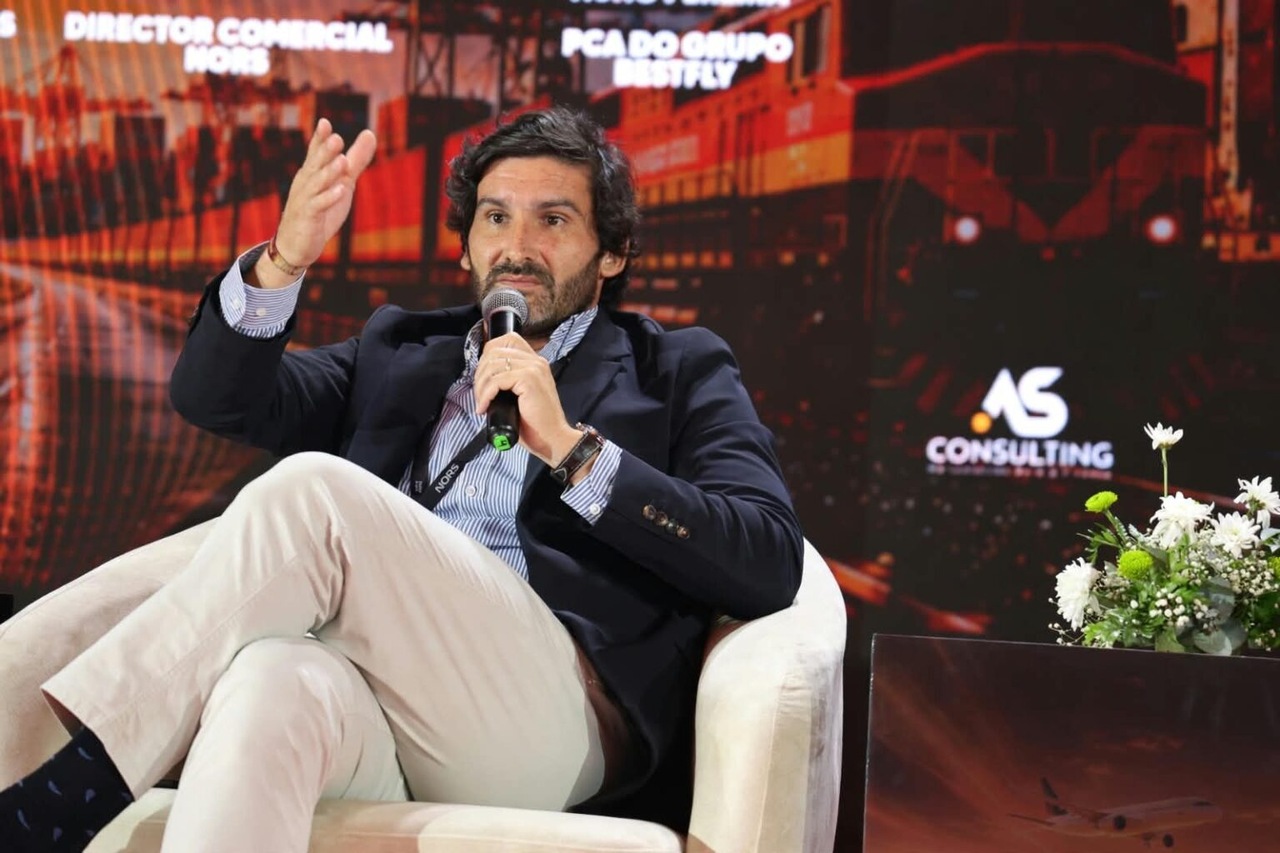

NORS Angola’s commercial director Licínio Sanches has called for deeper integration across all modes of transport in Angola and warned that young professionals will need ‘ambition and flexibility’ to keep pace with accelerating technological change in the sector.
Angola’s transport sector is undergoing a period of evolution, with new technologies and stronger cooperation between stakeholders opening fresh opportunities, Sanches said on Tuesday, 29 September, speaking to journalists in Luanda at the close of a panel discussion titled ‘The Future of African Transport: Innovation, Talent and the Jobs of Tomorrow’.
The debate took place during the second edition of the Angola Hub Transport and Logistics Summit (AHTLS 2026), which runs until 30 September at the Talatona Convention Centre. Organised by the Ministry of Transport, the summit has drawn policymakers, investors and specialists from 27 countries, with the Lobito Corridor, infrastructure investment attraction and the digital transformation of the sector as its central themes.
For Sanches, the future of the sector rests on four pillars: investment in infrastructure, technological innovation, integration across different modes of transport, and human capital development. He advocated for stronger coordination between road, rail, airport and maritime operations, which he described as essential to improving the efficiency of transport and logistics across Angola.
The NORS Angola executive acknowledged that road, rail, port and airport networks are in better condition today than in the past, but conceded there remains ‘a path still to travel’. He argued that existing shortcomings should be seen as investment opportunities rather than obstacles, citing the rehabilitation of rail corridors as an example of how infrastructure upgrades have unlocked new possibilities for both freight and passenger transport.
Youth qualification emerged as a second central theme of Sanches’s remarks. Academic and technical training alone, he argued, is no longer sufficient: the pace at which new technologies emerge demands professionals who are willing to update their knowledge continuously. ‘If that new professional does not have the ambition and flexibility to keep learning, they will miss the train of evolution,’ he warned.
NORS Angola takes in dozens of interns each year, a number of whom subsequently join the company’s permanent workforce. Sanches stressed that retaining national talent is a priority, with the aim of ensuring that a young professional working in Angola feels the same recognition and career opportunities they would find anywhere else in the world. The group also maintains social projects and cooperation programmes with educational institutions.
In road transport, where the company operates directly, Sanches highlighted ongoing digitalisation and modernisation work. The strategy involves bringing technologies already deployed in other markets to Angola, including digital tools and connectivity solutions designed to improve efficiency for operators and companies across the sector.
NORS is a Portuguese group with roots in Auto Sueco, founded in Porto in 1933 when Luiz Óscar Jervell became Volvo’s representative in Portugal. The group, majority-owned by the Jervell family alongside the Jensen family, adopted the NORS name in 2013 by which point it was present across four continents and 24 markets.
Angola was the group’s first international step: it entered the country in 1991 at Volvo’s request. Auto Sueco Angola, headquartered in Luanda, took on the import, sales and after-sales servicing of Volvo trucks, buses, engines and passenger vehicles. In 2005 the group began distributing Volvo construction equipment in Angola through Auto-Maquinaria, and in January 2020 KinLai launched operations as the authorised dealer for Chinese truck brand Dongfeng.
In October 2024, all these brands were consolidated under the NORS name in Angola, with the creation of dedicated units including Nors Trucks and Buses Angola and Nors Construction Equipment Angola. At the time, the company described Angola as a strategic market. Earlier that year, in January 2024, the group had inaugurated new facilities in the country dedicated to after-sales services for trucks, buses and semi-trailers, as well as the sale and servicing of construction equipment.

Licínio Sanches brings long experience of the Angolan market to his current role. He began his career in the commercial division of equipment for the paper industry before moving to Atlas Copco in Portugal, after which he relocated to Angola as the company’s Country Manager. He joined the NORS Group as executive director of Auto-Maquinaria and later served as Chief Executive of Auto Sueco Angola.
The AHTLS 2026 summit, which has positioned the Lobito Corridor as a centrepiece of Angola’s regional integration ambitions, continues to attract international attention as the government pursues a broader strategy of infrastructure-led economic diversification.
Source: Mercado / Original article: https://mercado.co.ao/nors-aposta-na-digitalizacao-e-na-formacao-de-jovens-para-acompanhar-a-transformacao-dos-transportes-em-angola/