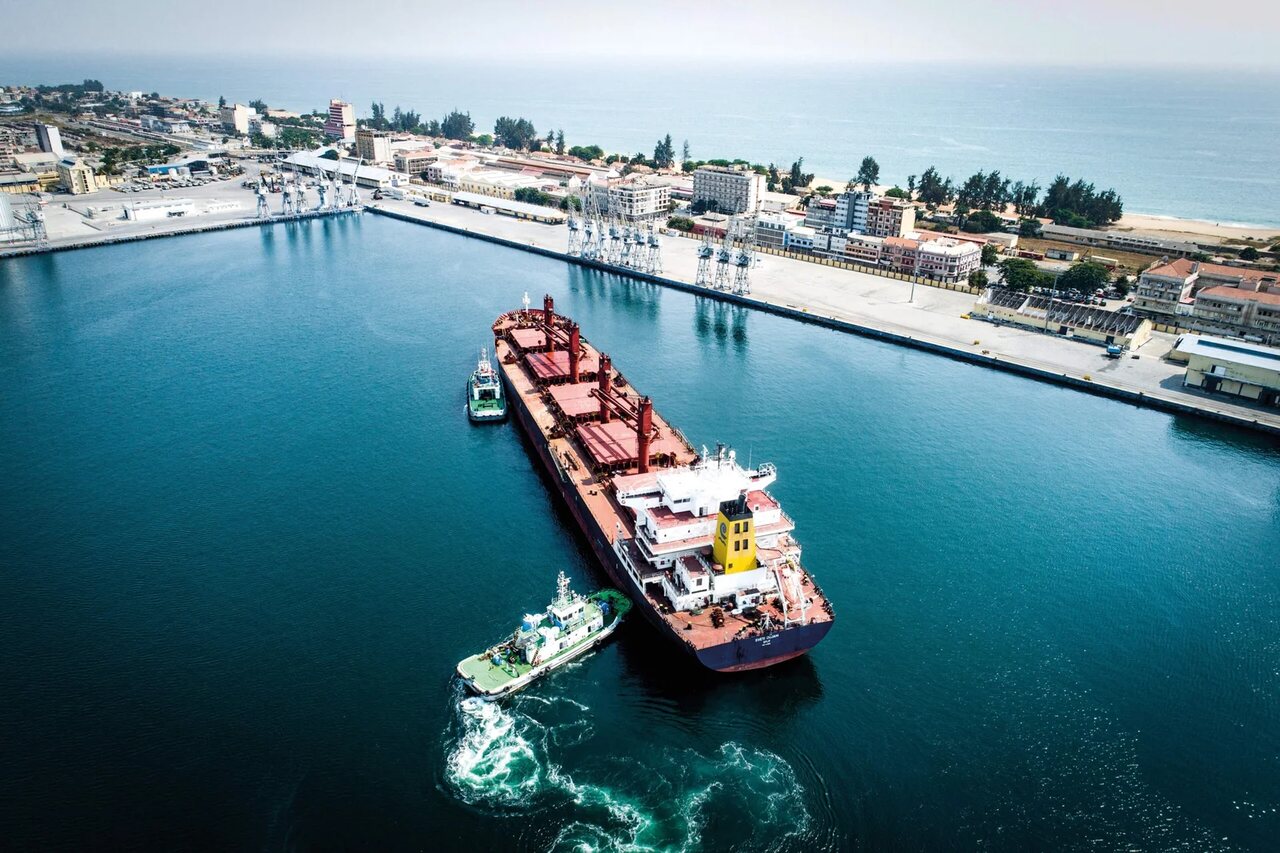

Soyo Port, in Angola's Zaire province, recorded an annual turnover of 7.067 billion kwanzas in 2025, according to figures presented by Fernando Dias, chairman of the board of Empresa Portuária do Soyo, the state port operator.
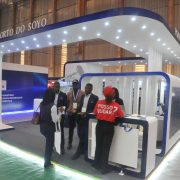
The figure reflects revenue generated by concessionaire companies operating within the port facilities as well as income flowing from the current infrastructure management model. The data were disclosed by the newspaper O País on the sidelines of the Angola Hub Transport & Logistics Summit 2026, where the port was among the infrastructure showcased.
The company currently employs 113 direct workers and plays a significant role in the economic activity of both the Soyo municipality and Zaire province more broadly. Management is nonetheless targeting an expansion of operational capacity and an improvement in the port's operating conditions, at a time when logistics is regarded as a critical enabler of trade growth.
Fernando Dias identified digitalisation as one of the port's foremost challenges. According to the executive, Soyo Port requires substantial investment to transform its infrastructure into a smart port and to keep pace with the technological advances recorded across the international maritime sector.
"So as not to fall behind, Soyo Port must move in that direction," Dias told O País, adding that technological modernisation entails significant expenditure, given that the majority of equipment and solutions used in the country are imported.
Beyond digitalisation, improving transport connectivity is another priority identified by port management. Dias has argued for the strengthening of the Soyo rail link and for improvements to the local airport, both of which he regards as essential to facilitating the greater movement of people and goods through the facility.
At present, the overland link with Luanda represents one of the main access routes to Soyo. While the Luanda–Soyo road is considered an important regional artery, the port chairman pointed to constraints on connections with other provinces — notably Mbanza Congo and Uíge — as well as on the air link with Cabinda.
In his assessment, those connectivity gaps erode the port's competitiveness and limit its ability to attract new cargo and passenger flows. Improved connectivity would, conversely, bring the port closer to other parts of the country and strengthen its integration into the national logistics network.
The port's expansion strategy is also tied to a new terminal concession model. In April 2026, the passenger and cargo terminals at Soyo Port were formally awarded to Sogester under a 20-year concession, according to information published by Rádio Mais.
For Dias, the arrangement follows the prevailing trend among modern ports, whereby the private sector assumes a substantial share of operational responsibilities while the state retains regulatory and oversight functions.
Sogester has thus joined the roster of operators with a presence at Soyo, alongside Kwanda and Petromar — both concessionaires previously referenced by the Empresa Portuária do Soyo chairman.
The new configuration is intended to improve terminal efficiency and create conditions for greater demand for port services. The Soyo Port administration considers that growth in activity could open the door to fresh investment and consolidate the infrastructure's role as a logistics platform for northern Angola.
Soyo Port's geographic position also gives it particular strategic importance for the oil and gas industry. The facility sits at the mouth of the Congo River, close to major offshore hydrocarbon exploration zones, and performs a logistics support function for operations carried out across the region.
Angola's transport planning documents explicitly identify proximity to oil and gas blocks as one of Soyo's key strategic advantages. The infrastructure also serves import and export operations destined for the interior of the region.
The drive to modernise technology, improve overland and air links, and deepen the involvement of private operators represents, in that context, the management's strategy for broadening the port's overall activity base.
With annual turnover already exceeding seven billion kwanzas, the challenge facing the Soyo Port administration is now to translate that performance into a platform for sustained expansion — attracting new cargo flows, raising terminal efficiency, and reinforcing the port's position within Angola's wider logistics network.
Source: Mercado / Original article: https://mercado.co.ao/porto-do-soyo-movimenta-mais-de-sete-mil-milhoes-de-kwanzas-por-ano/