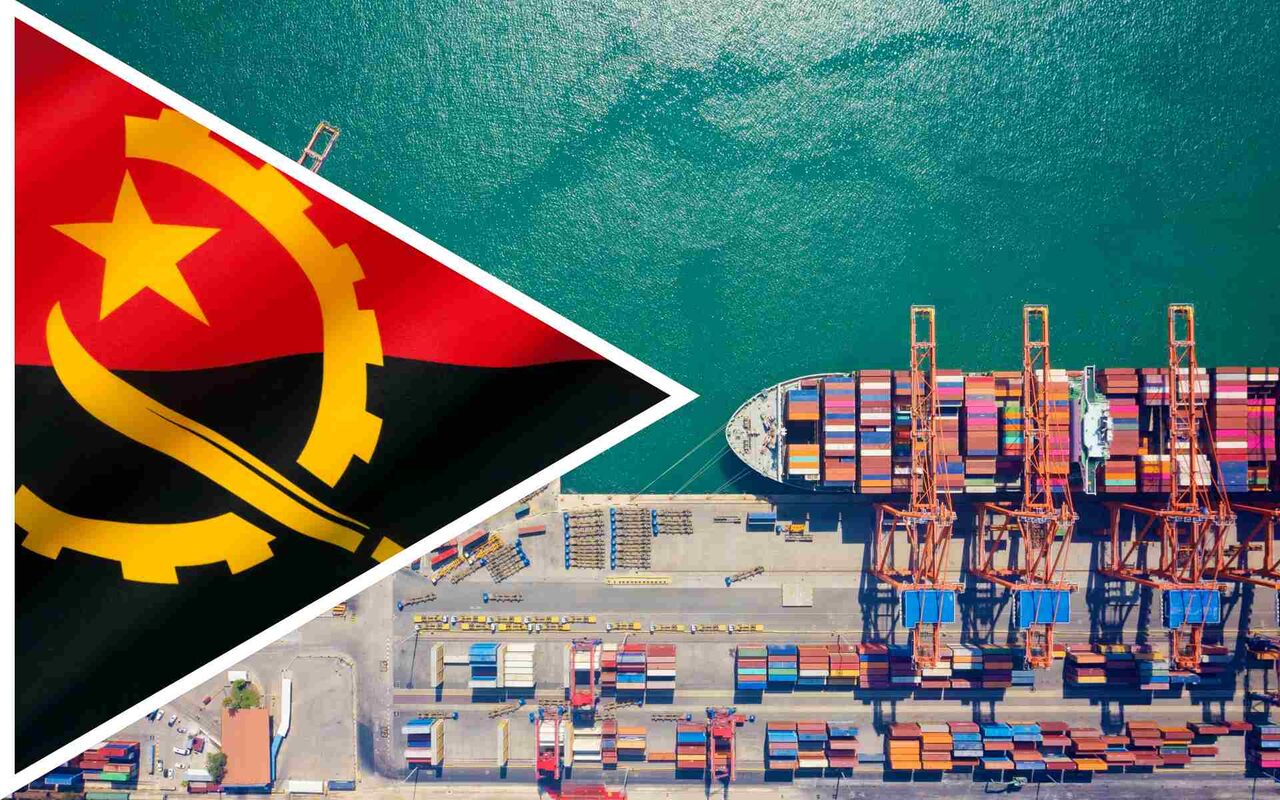

Angola's Transport Minister Ricardo Viegas de Abreu has argued that the majority of barriers to African trade lie within governments' own control, pointing to logistics inefficiencies, customs bottlenecks, service restrictions and inadequate infrastructure as the continent's primary commercial drag.
Approximately 60% of the trade costs borne by African countries stem from factors that are internal to those states — including logistical inefficiencies, customs difficulties, service restrictions and infrastructure shortfalls — according to Viegas de Abreu, speaking at the Angola Hub Transportes e Logística Summit (AHTLS 2026) in Luanda.
The assertion reframes the terms of the debate. In practice, the largest share of the costs that make intra-African trade expensive does not arise from external barriers but from problems that African governments are, in large measure, capable of resolving themselves.
The argument was at the centre of the second edition of the AHTLS 2026, held in Luanda from 28 to 30 September. The summit's dominant message was that reducing trade barriers alone is insufficient to bring African goods to market on competitive terms. Transport costs, cargo transit times, port efficiency, road and rail quality, and border procedures are all decisive determinants of business competitiveness.
António Santana, the summit's executive director, stressed that the efficiency of a logistics corridor benefits not only the country in which it is located — it can directly influence transport costs and the competitiveness of neighbouring economies.
During the summit, Viegas de Abreu argued that Angola is at a stage where infrastructure investment must be accompanied by genuine improvement in logistics systems. The modernisation of transport, he said, must translate into more efficient services, lower logistics costs and stronger links between regions.
The minister also underlined the importance of deepening regional cooperation and establishing mechanisms to overcome the obstacles that continue to impede the free movement of goods between African countries. On the Lobito Corridor specifically, he cautioned that its development must not be confined to transporting raw materials from the continent's interior to international markets.
This is not the first time the minister has linked logistics efficiency to the everyday economy. In June, he argued that reducing logistics costs is critical to business competitiveness and household purchasing power, since high transport and distribution costs are ultimately passed on to the final consumer.

At the AHTLS 2026 closing session on 30 September, Viegas de Abreu highlighted the strong engagement of the private sector in transnational infrastructure investment and said Angola needs 'a private sector that believes in investing in Angola.' The minister also confirmed that a third edition of the summit will take place in 2027, with the objective of transforming Africa into a zone of solutions, mobility and connectivity — rather than an obstacle between two oceans.
Source: Mercado / Original article: https://mercado.co.ao/alfandegas-logistica-e-infra-estruturas-pesam-mais-ado-que-as-barreiras-externas-no-comercio-africano/