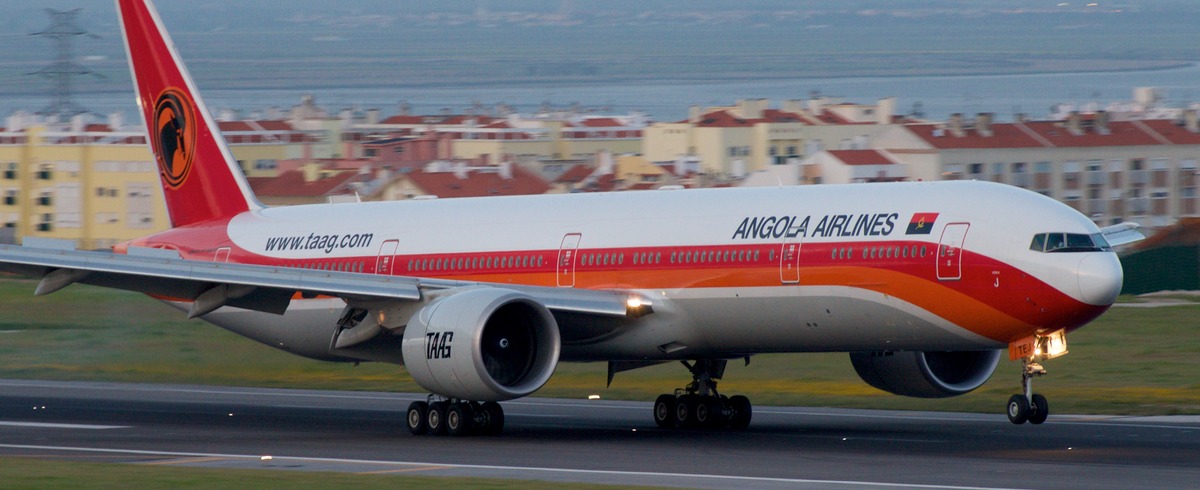

Angola’s national carrier TAAG has moved to centralise all ticket sales on the Luanda–Cabinda–Luanda route through its own channels from 15 September, cutting out intermediaries whose activities had generated widespread ticket speculation and pricing distortions on one of the country’s most commercially sensitive domestic routes.
The airline acknowledged that third-party intermediaries had been artificially inflating fares well above the officially subsidised round-trip economy price of 29,717 kwanzas, while at the same time official channels showed flights fully booked — in some cases as far ahead as December. Seats, however, continued to circulate through brokers at markedly higher prices. TAAG said the move to centralise distribution was necessary to control seat availability and guarantee passengers access to the regulated fare.
Tickets will henceforth be sold exclusively through TAAG’s call centre, its airport shops at Cabinda and Dr. António Agostinho Neto International Airport in Luanda, its mobile application and its website. Flight frequencies and the subsidised tariff will remain unchanged.
The Cabinda decision is one of several measures the airline’s management has introduced following weeks of public pressure over service quality and financial transparency. TAAG says it is tightening budgetary controls, reorganising its commercial processes, and conducting a systematic review of where the company generates, leaks or fails to capture revenue.
As part of the restructuring, the carrier is recovering grounded aircraft and redeploying staff. It plans to retire approximately 300 employees — roughly 10% of its total workforce — while simultaneously seeking to preserve the specialised technical skills on which flight operations depend. That balance is already being tested: the Aircraft Maintenance Technicians’ Union (Sindicato dos Técnicos de Manutenção de Aeronaves, STMA) called a strike for 1 September, citing pay grievances and disagreements over management decisions and the course of negotiations.
TAAG’s administration announced that the strike notice had been withdrawn, but the underlying dispute has not been resolved. The union has kept open the option of calling a fresh stoppage should a satisfactory agreement fail to materialise. The stand-off places management in a difficult position: it must cut costs and control the wage bill without losing the licensed engineers and technicians who keep the fleet airworthy.
On the commercial side, TAAG is pursuing a strategy of revenue growth through partnerships rather than expanded capital expenditure. Its codeshare agreement with Brazil’s LATAM gives the Angolan carrier access to more than 50 Brazilian destinations via São Paulo without deploying its own aircraft on those routes. In Europe, AVIAREPS assumed TAAG’s commercial representation from 1 September, tasked with growing sales through travel agencies, tour operators and corporate clients. The underlying logic is to extract greater revenue from the existing asset base without allowing costs to rise in parallel.
The airline’s first interim financial results were presented at the end of August. In the first half of 2026, TAAG reported generating US$19.2 million in operating cash flow and executing expenditure US$25.7 million below budget. The carrier also recovered five previously grounded aircraft and expanded its African network from 10 to 13 destinations, with regulatory clearance already granted to launch services to Accra, Dakar and Praia.

Management described these as encouraging early indicators of operational improvement, while stopping short of characterising them as evidence of a full recovery. The results, combined with the ongoing strike threat and the workforce restructuring, paint a picture of an airline that has stabilised some key metrics but still faces significant execution risk as it seeks to return to sustained profitability.
Source: Expansão / Original article: http://expansao.co.ao/empresas/detalhe/taag-aperta-controlo-das-operacoes-para-fechar-fugas-e-travar-prejuizos-74569.html