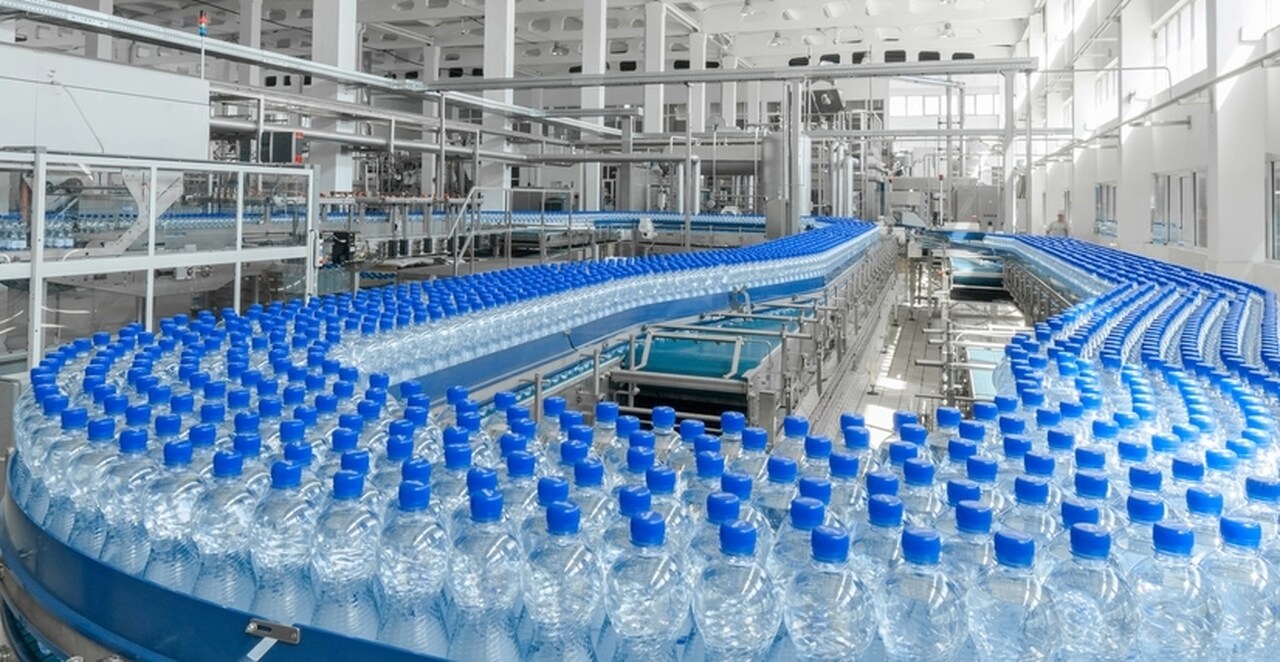

PTA-Águas, a water purification and bottling company, is inaugurating a €3 million factory in the municipality of Catumbela, Benguela province, on Friday — a facility its owners say will significantly expand the supply of potable water across one of Angola’s most densely populated regions.
The plant, which covers 2.5 hectares on the banks of the Catumbela River, has a daily purification capacity of 150 cubic metres of water, sufficient to produce approximately 10,000 five-gallon bottles — equivalent to around 189,000 litres — per day.
The production line is also configured to process roughly 12,000 smaller bottles of still water daily, with the facility equipped to bottle containers in both five-gallon (18.9-litre) and three-gallon (approximately 12-litre) formats.
Two extraction boreholes, each sunk to a depth of 35 metres, feed the plant with raw water from the Catumbela River basin, which is then processed through a seven-stage industrial purification system.
The factory has generated 42 direct jobs at launch, though its managing partner, German engineer Eckhard Stiller, said the installed capacity positions the company to expand output significantly in coming years, with headcount expected to grow to more than 100 positions.
Speaking to ANGOP on Thursday, Stiller — who has approximately 40 years of engineering experience — said the new plant is designed to meet existing demand in the local market, targeting in particular the municipalities of Catumbela, Lobito and Benguela.
Beyond Benguela province, Stiller said the company intends to reach other regions of Angola by leveraging the Lobito Corridor. The factory’s proximity to the Benguela Railway (CFB) line, he added, could in the future facilitate rail transport of production to central Angola.
The construction of the facility was financed primarily through equity, with complementary bank financing accessed under Notice 10 of the National Bank of Angola (BNA), a framework designed to support domestic investment.
Stiller confirmed the total investment stands at approximately three million euros, a figure that reflects both the civil works and the installation of advanced production technology — the same technology employed at PTA-Águas’ existing plant in Luanda.
On water quality, the German investor said the company’s production parameters exceed the sanitary requirements set by international health bodies and the standards of several of the world’s leading consumer markets.
The customer base currently skews towards the business-to-business segment in terms of sales volume, with Stiller identifying state institutions, industrial units and offshore-sector clients among the company’s target markets.
Stiller acknowledged that the path to inauguration was not without obstacles, citing bureaucratic processes, licensing hurdles and difficulties in regularising the land title — challenges that included what he described as attempts to remove the company from the site it originally acquired some three years ago.
The company places particular emphasis on workforce development, with engineers and technicians recruited and trained locally to handle the operation and maintenance of installed equipment.
PTA-Águas began commercialising water in three-gallon containers roughly three years ago, a format the company says facilitates transport and lends itself to distribution through modern retail channels.
One of the company’s environmental commitments centres on the use of returnable containers. Stiller highlighted the firm’s intention to reduce reliance on single-use packaging and to promote a model based on the reuse of receptacles.
PTA-Águas chief executive Sheila Stiller, in her own remarks, underscored how the expansion of the distribution network could generate opportunities for resellers and create indirect employment through the commercial network of the Saudabel brand.
Sheila Stiller also placed job creation and local recruitment at the forefront of the company’s priorities for the Catumbela installation, emphasising that the economic benefits of the operation should remain within the region.

The company’s strategy, she explained, is specifically designed to reduce dependence on workers brought in from Luanda and to ensure that new hiring is drawn from the local labour pool.
‘When we move from one part of the country to another, we want to make sure that recruitment is local,’ she said.
According to Sheila Stiller, the decision to site the new unit in Catumbela was driven by both market proximity and strategic logistics — the location allows the company to serve the Benguela region while supporting water distribution along the Lobito Corridor.
The Lobito Corridor, a rail and road artery connecting Angola’s Atlantic coast to the Democratic Republic of Congo and Zambia, has become a focal point for Angolan industrial and logistics investment, with the government positioning it as a key conduit for goods moving to and from central Africa.
The inauguration of the Catumbela plant adds to a growing cluster of manufacturing investments in Benguela province, as Angola seeks to diversify its economy beyond oil and expand domestic industrial output.
Source: ANGOP / Original article: https://www.angop.ao/noticias/economia/pta-aguas-investe-tres-milhoes-de-euros-em-nova-fabrica-na-catumbela/