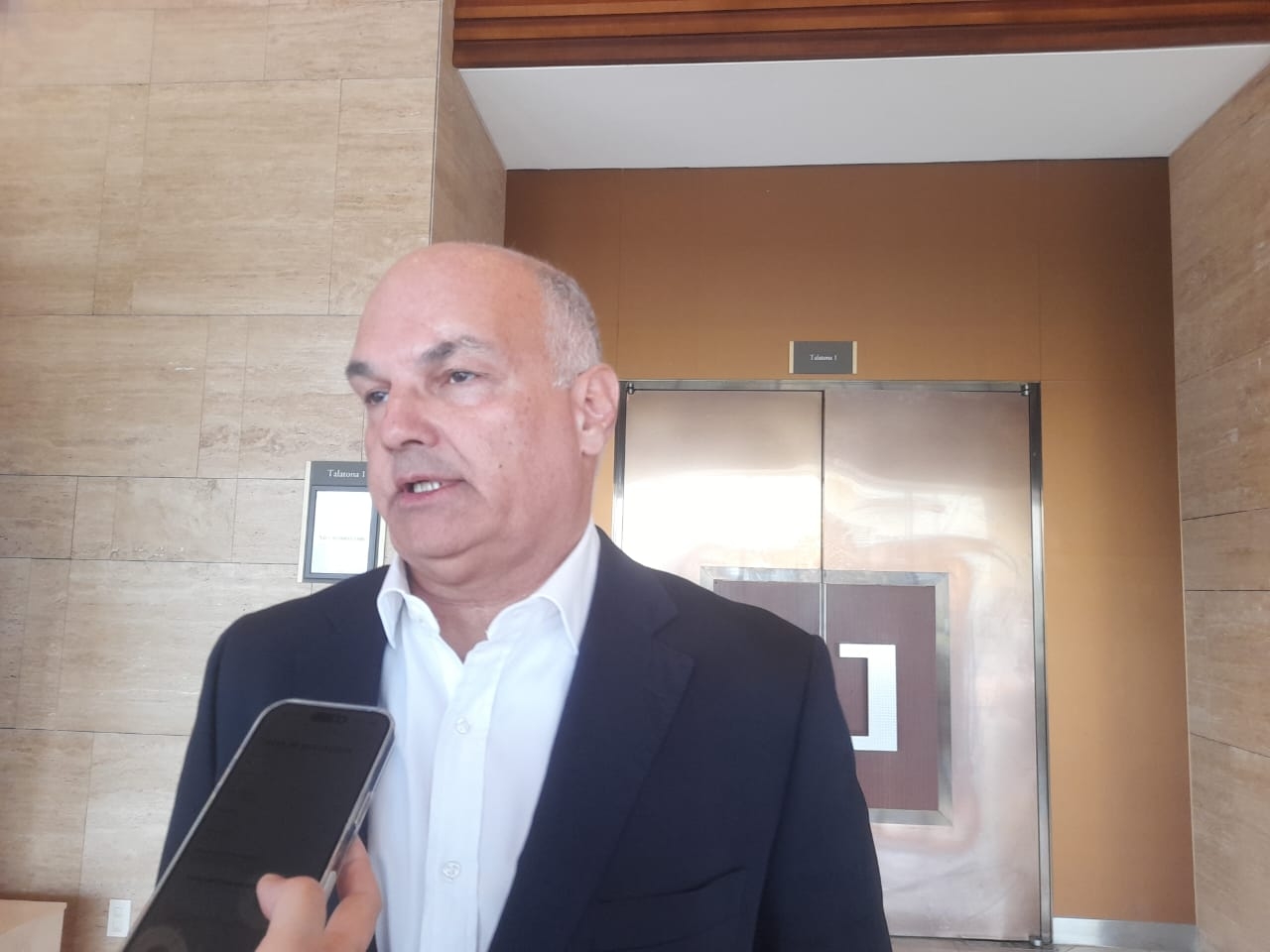

Angola’s agricultural sector holds transformative potential for economic diversification, but realising that opportunity hinges on attracting investment, mobilising technology and converting natural resources into productive output — a message delivered by Paulo Fardilha, chief executive of Agritech Show Luanda, during a videoconference address to the Global Agri Forum in Lisbon on Thursday, 1 October, as the first edition of the agricultural trade fair opened simultaneously at Fazenda da Quiminha in Angola.
Angola has approximately 37 million hectares of arable land, of which only 10% to 15% is currently under cultivation, Fardilha said. That vast untapped capacity, combined with the country’s existing water resources, represents a significant opportunity for large-scale agricultural projects and for new investors to enter the Angolan market.
“Given the economic diversification imperative Angola faces — still heavily dependent on oil — there is a strong drive to develop agriculture rapidly,” Fardilha said, underscoring the urgency of accelerating the sector’s transformation.
His address placed capital mobilisation and the alignment of actors across the agricultural value chain at the centre of the agribusiness strategy. Agritech Show Luanda was conceived, he explained, as a platform to bring together Angolan entrepreneurs, producers, technology suppliers and prospective investors, creating conditions to forge partnerships and develop concrete projects.
Brazil and Arab Funds Eye the Angolan Market
Among international cooperation opportunities, Fardilha highlighted Brazil’s interest, citing the South American nation’s experience in developing agricultural systems in regions that share certain characteristics with parts of Angola.
The transformation of Brazil’s Cerrado savannah was cited as a reference point for adapting know-how and technologies to the Angolan context, though Fardilha noted that the applicability of such models depends on regional conditions, infrastructure availability and the production frameworks adopted.
“Brazil is one of the main partners to date, but there are also many companies and many Arab investment funds here with their eyes on Angola,” he said.
The interest of these investors opens avenues for mobilising financing, modernising farming operations and building production chains oriented both toward supplying the domestic market and toward export.
Attracting capital, however, must be accompanied by the creation of operational conditions for agricultural projects — including access to equipment, technical assistance, logistics infrastructure, adequate financing and marketing channels capable of ensuring the offtake of produce.
A further dimension of Fardilha’s address was cooperation across Portuguese-speaking markets. His participation in the Global Agri Forum from Luanda drew a direct link between the Lisbon business forum and the Angolan agricultural fair, connecting two initiatives aligned around agribusiness development. “Agritech Show wants to be the Lusophone home of agribusiness here in Angola,” he said, crystallising the ambition to position Angola as a meeting point for companies, producers, investors and specialists from Portuguese-speaking markets worldwide.
The first edition of Agritech Show Luanda runs from 1 to 4 October at Fazenda da Quiminha, bringing together companies and participants from across agricultural production, machinery, technology, finance and specialist services. The programme includes on-site demonstrations, equipment exhibitions and business meetings designed to identify investment opportunities.
Converting Potential Into Production
For Angola, the central challenge is converting land availability and natural resources into productive capacity, employment generation and domestic value added. Reducing dependence on food imports and developing the agro-industrial sector requires a more consistent, productive and competitive agricultural supply.

Attracting investors could contribute to that process, but outcomes will depend on projects actually being implemented, on improvements to production conditions, and on effective coordination among farmers, food processors, distributors and consumer markets.
Fardilha’s message thus points to a shift in emphasis: rather than simply showcasing Angola’s agricultural potential, the priority is to create mechanisms that mobilise the financial, entrepreneurial and technological resources needed to exploit it.
Agritech Show Luanda is seeking to establish itself as a platform for that convergence, at a moment when economic diversification places agriculture among the sectors best positioned to broaden the country’s productive base and generate new business opportunities.
Source: Mercado / Original article: https://mercado.co.ao/agritech-show-luanda-quer-colocar-angola-no-radar-dos-grandes-investidores-agricolas/